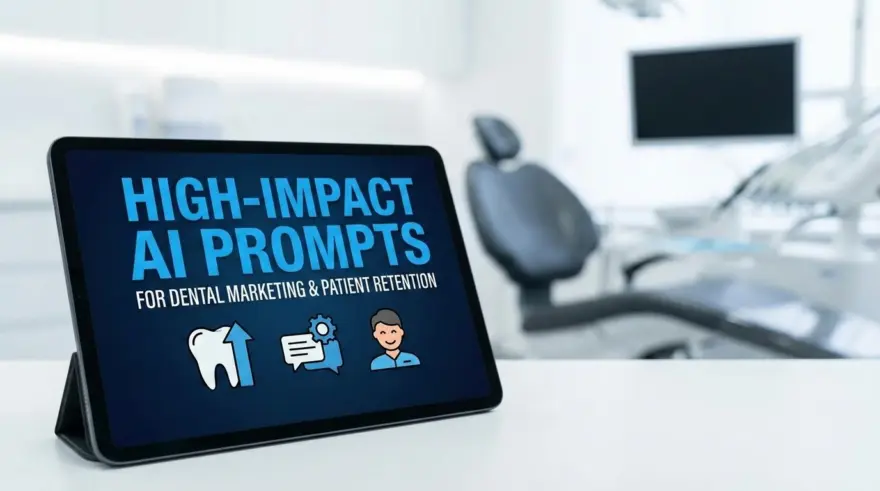
Modern artificial intelligence has fundamentally shifted how dental practices handle patient communication and digital presence. It is no longer about generic automation; it is about hyper-personalized engagement and strategic growth.
The following prompts have been rigorously tested and optimized for the leading Large Language Models (LLMs): ChatGPT, Gemini, Claude, and DeepSeek. While each platform possesses unique architectural strengths—such as Claude’s empathetic nuance or DeepSeek’s logical structuring—these 10 prompts provide a universal foundation for Dentists and Practice Managers looking to streamline operations and increase treatment acceptance rates.
1. The Empathetic Post-Op Follow-Up
Best for: Claude (Excel at capturing a warm, professional clinical tone).
This prompt generates a clear, reassuring email or text message to check on patients after invasive procedures, reducing anxiety and administrative call volume.
Act as a Senior Dental Practice Manager. Draft a post-operative check-in email for a patient who underwent [PROCEDURE NAME, e.g., a root canal or wisdom tooth extraction] yesterday.

The tone should be warm, professional, and reassuring.
Include the following elements:
1. Express hope that they are recovering well.
2. Reiterate 3 critical aftercare bullet points specific to this procedure.
3. List 2 warning signs that warrant an immediate call to the office.
4. A direct contact number for emergencies.

Keep the language simple (Grade 8 reading level) to ensure clarity under stress.
The Payoff: automates the critical “care cycle” loop, reducing patient anxiety while minimizing the time front-desk staff spend on routine check-in calls.
2. The Google Review Response Generator
Best for: ChatGPT (Versatile and consistent in tone adjustment).
Responding to reviews is critical for local SEO and reputation management. This prompt helps you navigate both glowing praise and difficult feedback while maintaining HIPAA compliance.
Draft a response to a [POSITIVE/NEGATIVE] Google Business Profile review for a dental practice.

The review mentions: "[INSERT REVIEW SUMMARY OR KEY POINTS]".

Constraints:
1. Do strictly maintain HIPAA compliance (do not acknowledge specific treatments or confirm the patient's identity).
2. If positive: Thank them for their trust and mention our commitment to comfort.
3. If negative: Express concern, do not get defensive, and provide a direct offline contact method (phone/email) to resolve the issue.
4. Keep it under 100 words.
The Payoff: Protects your practice’s online reputation with legally safe, professional responses that demonstrate you value patient feedback.
3. Patient Reactivation Campaign (The “Use It or Lose It” Email)
Best for: DeepSeek (Excellent at logical persuasion and structuring data-driven arguments).
End-of-year insurance benefits often go unused. This prompt structures a persuasive email to fill your schedule before the fiscal year ends.
Write a persuasive email subject line and body text aimed at inactive patients who have remaining dental insurance benefits.

Goal: Encourage them to book a hygiene appointment or complete pending treatment before the year ends.
Key Arguments to Include:
1. "Use it or lose it" concept regarding insurance maximums.
2. The link between oral health and systemic health.
3. Availability is filling up fast.

Tone: Urgent but helpful, not salesy.
The Payoff: Directly drives revenue by reactivating dormant patient files and filling gaps in the hygiene schedule during critical reporting periods.
4. Simplifying Complex Treatment Plans
Best for: Claude (Superior at explaining complex concepts simply).
Patients often decline treatment because they don’t understand the “why.” This prompt translates clinical jargon into patient-centric benefits.
I need to explain a [INSERT TREATMENT, e.g., Zirconia Crown vs. PFM] to a patient who is hesitant about the cost.

Act as an experienced Treatment Coordinator. Explain the procedure and the value of the investment in 3 distinct ways:
1. The "Longevity" angle: Durability and long-term savings.
2. The "Health" angle: Protection of the tooth structure.
3. The "Aesthetic" angle: How it looks and feels.

Avoid heavy dental jargon. Use analogies where possible.
The Payoff: Increases case acceptance rates by bridging the gap between clinical necessity and patient understanding.
5. Social Media Educational Content Calendar
Best for: Gemini (Strong at accessing diverse topics and brainstorming trends).
Consistency on social media builds trust. This prompt generates a month’s worth of content ideas that position you as an authority.
Create a 4-week social media content calendar for a Cosmetic Dental Practice.
Format: Table (Week, Topic, Post Type, Caption Hook).

Focus on these pillars:
1. Myth-busting (e.g., whitening damages enamel).
2. Behind-the-scenes (team culture).
3. Patient transformations (generic/educational).
4. Technology highlights (e.g., digital scanners).

Ensure the "Caption Hook" is catchy and stops the scroll.
The Payoff: Eliminates writer’s block and ensures a consistent digital presence that attracts high-value cosmetic patients.
6. Local SEO Blog Post Outline
Best for: DeepSeek (Strong architectural layout for technical content).
To rank for “Dentist near me,” you need high-quality local content. This prompt builds an SEO-optimized structure.
Generate a comprehensive blog post outline targeting the keyword: "Invisalign vs Braces for Adults in [CITY NAME]".

The outline must include:
1. H1 Title options (SEO-optimized).
2. H2 headers covering: Cost comparison, Treatment time, Comfort/Lifestyle impact, and "Why choose our practice."
3. Bullet points for key semantic keywords to include in each section.
4. A dedicated FAQ section based on common patient questions.
The Payoff: Provides a roadmap for high-ranking content that drives organic traffic from local searchers specifically looking for your services.
7. The New Patient Welcome Sequence
Best for: ChatGPT (Great for standard business communications).
First impressions matter. This prompt creates an onboarding sequence that reduces no-shows.
Draft a 2-part email sequence for new patients who have just booked their first appointment.

Email 1 (Sent immediately):
- Warm welcome.
- Link to digital forms.
- Directions/Parking info.
- What to expect during the first visit.

Email 2 (Sent 24 hours before):
- Appointment reminder.
- Cancellation policy refresher (polite but firm).
- "Looking forward to meeting you."
The Payoff: Streamlines the intake process and drastically reduces new patient no-show rates by setting clear expectations.
8. Staff Training Roleplay Script
Best for: Claude (Excellent for generating realistic dialogue).
Training staff to handle price shoppers or difficult calls is essential. This prompt creates realistic scenarios for team meetings.
Create a roleplay script for a front-desk receptionist handling a "Price Shopper" caller who asks, "How much is a crown?" right away.

The script should demonstrate the "Pivot and Value" technique:
1. Acknowledge the question.
2. Explain that variables exist (material, build-up, exam needs).
3. Pivot to offering a consultation or "New Patient Special" to get them in the door.

Provide the script for both the 'Patient' and the 'Receptionist'.
The Payoff: Upskills your front office team, turning inquiry calls into booked appointments through effective verbal skills.
9. Referral Program Announcement
Best for: Gemini (Good for persuasive, community-focused copy).
Internal referrals are your lowest cost-per-acquisition channel. This prompt helps you launch a program effectively.
Write a script for a printed flyer and an email blast announcing a new "Care to Share" patient referral program.

The Offer: Both the existing patient and the new patient get a [INSERT DOLLAR AMOUNT] credit toward treatment.
Tone: Community-focused, appreciative, and exciting.
Key Message: "The highest compliment you can pay us is the referral of your family and friends."
The Payoff: Incentivizes your loyal patient base to become active advocates for your practice.
10. Instagram/TikTok Video Scripts (Educational)
Best for: ChatGPT (Quick, conversational, and format-aware).
Short-form video is dominant. This prompt turns complex topics into bite-sized, engaging scripts.
Write a 30-second video script for a Dentist to record for Instagram Reels/TikTok.

Topic: "Why your gums bleed when you floss (and why you shouldn't stop)."
Structure:
1. Hook (0-3 seconds): Surprising statement.
2. The Problem (3-15 seconds): Explanation of inflammation/gingivitis.
3. The Solution (15-25 seconds): Consistency reduces bleeding.
4. CTA (Final 5 seconds): "Follow for more dental truth bombs."
The Payoff: Positions the dentist as a relatable expert, expanding brand reach to a younger demographic on high-engagement platforms.
Pro-Tip: Contextual Prompt Chaining
To get the most out of these tools, use Prompt Chaining. Never settle for the first draft. If a model generates a blog post that feels too generic, follow up with: “Rewrite the section on dental implants to sound more authoritative and include statistics on success rates.” By iteratively refining the output, you transform a generic AI response into a piece of content that sounds distinctly like your practice.
The integration of AI into dental practice management is not about replacing the human touch; it is about automating the administrative friction that prevents you from delivering it. By mastering these prompts, you ensure that your marketing is consistent, your patient communication is clear, and your chair time is focused on clinical excellence rather than copywriting. Start with one prompt this week, refine it to your voice, and watch your operational efficiency climb.