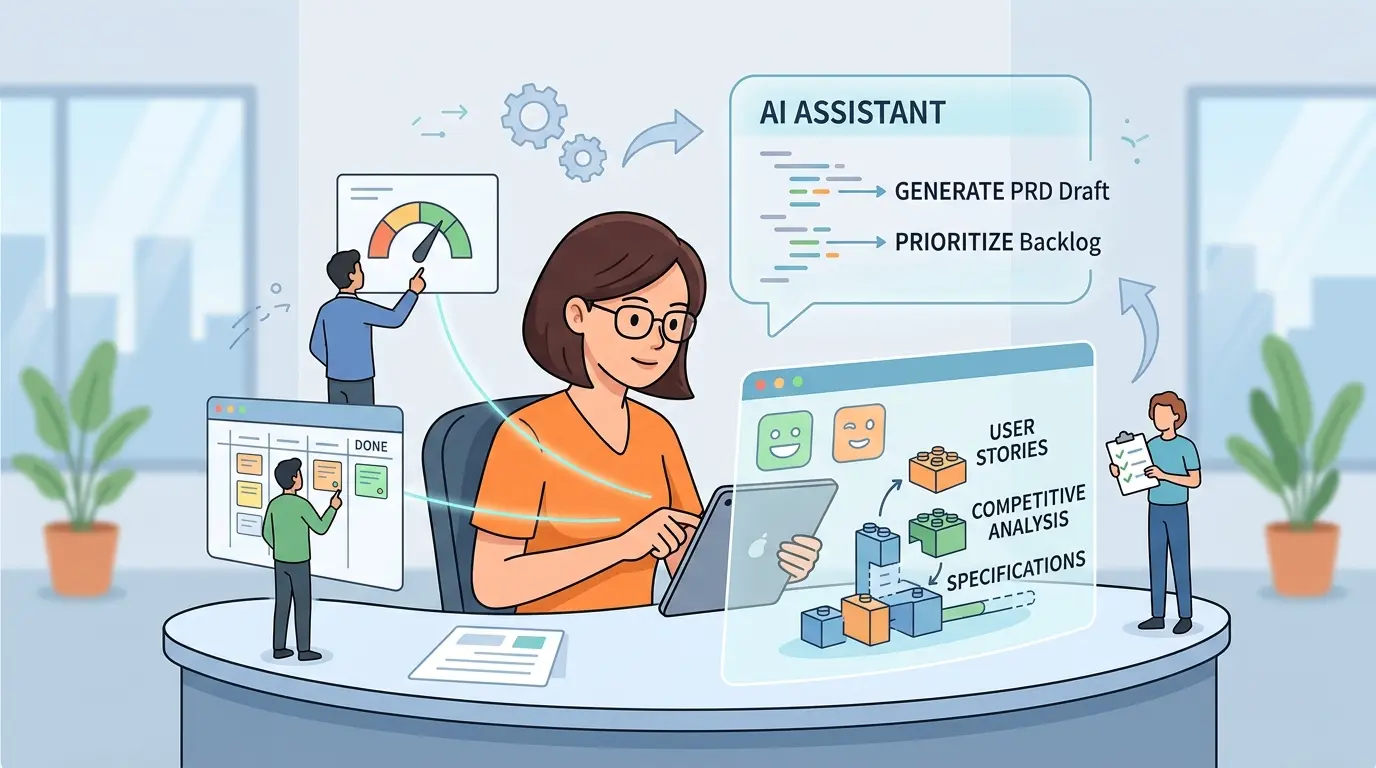
Product managers rarely lose time because they lack ideas. They lose time because product signals arrive in fragments: scattered customer calls, Slack threads, backlog debates, executive asks, launch constraints, and half-formed stakeholder opinions that need to become one clear decision. The real bottleneck is not ideation. It is synthesis, structure, and alignment.
Whether you use ChatGPT, Gemini, Claude, or DeepSeek, the challenge is the same: turn messy inputs into a usable PRD, an honest prioritization call, or a stakeholder narrative that survives scrutiny. The AI Prompts below are designed as a universal foundation for product managers who need sharper thinking, faster drafting, and cleaner communication. Each model has different strengths, but the prompt architecture stays portable. If you build repeatable workflows rather than one-off chats, TipTinker’s broader Prompts library is a useful companion.
Turn Raw Notes Into a Decision-Ready PRD
Model Recommendation: Claude is often the better fit for structured writing, nuanced product language, and surfacing missing logic without flattening the document into a generic template.
You are acting as a senior product manager.

I will give you rough notes, research fragments, stakeholder asks, and business context. Turn them into a decision-ready PRD.

Inputs I will provide:
- company and product context
- target user or segment
- problem evidence
- business goal
- constraints
- existing workflow or current behavior
- known stakeholder requests

Return the PRD in this structure:
1. Executive Summary
2. User Problem
3. Target User and Job To Be Done
4. Why This Matters Now
5. Product Scope
6. Non-Goals
7. Success Metrics
8. Dependencies and Constraints
9. Risks and Tradeoffs
10. Open Questions
11. Recommended Next Decision

Rules:
- do not invent evidence, metrics, or certainty
- flag missing inputs explicitly
- separate validated facts from assumptions
- rewrite vague requests into clear product language
- make the document concise enough for leadership review

Source material:
[PASTE NOTES, RESEARCH, AND REQUESTS]
The Payoff: This prompt turns fragmented product thinking into a PRD that can actually be reviewed, debated, and approved. It is especially useful when your first draft would otherwise be a loose pile of notes instead of a decision document.
Score Opportunities With an Explicit Prioritization Framework
Model Recommendation: DeepSeek works well when the task depends on structured comparison, transparent reasoning, and exposing how assumptions change rankings.
You are helping me prioritize product opportunities with disciplined reasoning.

I will give you a list of initiatives, constraints, and available evidence.

Use this framework:
- Reach
- Impact
- Confidence
- Effort

For each initiative, return:
1. Short Description
2. Expected User or Business Outcome
3. Reach Estimate
4. Impact Estimate
5. Confidence Notes
6. Effort Estimate
7. Key Assumptions
8. Main Risks
9. Suggested Priority Tier

Then provide:
- a ranked list from highest to lowest priority
- a short explanation of why the ranking makes sense
- a sensitivity check showing which assumptions would change the order
- a recommendation for what to validate before committing roadmap space

Rules:
- challenge weak assumptions
- do not hide uncertainty
- call out items that are emotionally attractive but weakly supported
- keep the output readable enough for a prioritization review

Initiatives and context:
[PASTE BACKLOG ITEMS, METRICS, STRATEGIC GOALS, AND CONSTRAINTS]
The Payoff: Product prioritization usually breaks down when scoring looks precise but the assumptions are invisible. This prompt forces the reasoning into the open so tradeoffs are easier to defend with leadership, engineering, and GTM teams.
Synthesize Multi-Source Feedback Into Product Themes
Model Recommendation: Gemini is useful when you need to absorb interview notes, support tickets, sales feedback, and analytics summaries in one pass.
You are a product insights analyst.

I will provide multiple feedback sources, such as:
- customer interview notes
- support tickets
- sales call summaries
- user research observations
- analytics summaries
- stakeholder comments

Your job is to synthesize them into product-relevant themes.

Return:
1. Top Themes
2. Evidence Behind Each Theme
3. Which User Segments Are Affected
4. Severity and Frequency Signals
5. Contradictions or Mixed Signals
6. Likely Root Causes
7. What Seems Urgent vs. What Merely Sounds Loud
8. Recommended Product Implications
9. Missing Evidence I Should Still Collect

Rules:
- preserve signal, not noise
- separate anecdotal comments from repeated patterns
- highlight where internal opinion conflicts with user evidence
- include direct evidence snippets only when they materially support a theme

Source material:
[PASTE FEEDBACK SOURCES]
The Payoff: This prompt helps product managers stop reacting to the loudest request in the room. It turns raw feedback into themes you can use in discovery, roadmap reviews, and PRD justification.
Draft a Stakeholder Alignment Memo Before the Meeting
Model Recommendation: Claude is often a strong fit for politically sensitive writing where tone, clarity, and careful framing matter as much as the underlying analysis.
You are helping me create a stakeholder alignment memo for a product decision.

I will provide:
- the initiative or decision
- why it matters
- known stakeholder positions
- risks, dependencies, and open questions
- the audience for the memo

Write a memo with these sections:
1. Decision Summary
2. Context and Problem Statement
3. Proposed Direction
4. Why This Option Wins Over Alternatives
5. Tradeoffs and Risks
6. Impact on Each Major Stakeholder Group
7. Likely Objections and Responses
8. Decisions Needed in the Meeting
9. Next Steps and Owners

Rules:
- keep the tone neutral, crisp, and executive-friendly
- avoid hype and vague product language
- make disagreement legible without sounding defensive
- surface unresolved issues instead of smoothing them over

Context:
[PASTE DECISION CONTEXT AND STAKEHOLDER NOTES]
The Payoff: Alignment usually fails before the meeting starts, when every team walks in with a different mental model. This prompt gives you a cleaner pre-read so disagreement becomes explicit, structured, and faster to resolve.
Run a Pre-Mortem on Scope, Risks, and Dependencies
Model Recommendation: DeepSeek is useful when you need technical decomposition, failure analysis, and a disciplined breakdown of what could go wrong.
You are conducting a pre-mortem for a planned product initiative.

Assume we shipped this initiative and it underperformed, slipped, or created organizational friction.

Analyze the initiative across these areas:
- user adoption risk
- technical delivery risk
- data or analytics risk
- go-to-market risk
- operational support risk
- dependency risk
- stakeholder misalignment risk

Return:
1. Failure Scenario Summary
2. Top Failure Modes
3. Early Warning Signals
4. Hidden Dependencies
5. Scope Ambiguities
6. Decisions We Must Make Before Build Starts
7. Mitigations and Owners
8. What Should Be Removed, Sequenced Later, or Validated First

Rules:
- be concrete, not dramatic
- prefer realistic failure modes over edge-case catastrophes
- show where vague scope creates execution risk
- identify risks caused by organizational behavior, not just technology

Initiative details:
[PASTE INITIATIVE, SCOPE, TEAMS, TIMELINE, AND DEPENDENCIES]
The Payoff: Many roadmap problems are visible before implementation starts, but only if someone forces the team to inspect the weak points. This prompt is a fast way to expose scope confusion, dependency blind spots, and execution risk.
Translate Strategy Into a Quarterly Roadmap Narrative
Model Recommendation: ChatGPT is a practical day-to-day choice when you need a strong first pass on structured communication that still leaves room for human judgment.
You are helping me write a quarterly product roadmap narrative.

I will give you:
- company goals
- product strategy
- available team capacity
- major initiatives under consideration
- must-keep commitments
- dependencies and constraints

Write a quarterly roadmap narrative with these sections:
1. What Matters This Quarter
2. The Core Product Bets
3. Why These Bets Matter
4. What We Are Not Doing
5. Tradeoffs We Are Accepting
6. Key Dependencies
7. Checkpoints We Will Use to Measure Progress
8. Talking Points for Leadership, Engineering, Design, and GTM

Rules:
- make the narrative crisp and decision-oriented
- avoid feature laundry lists
- connect initiatives back to strategy
- make tradeoffs visible
- do not pretend we can do everything

Context:
[PASTE STRATEGY, CAPACITY, INITIATIVES, AND CONSTRAINTS]
The Payoff: Roadmaps become easier to defend when they read like a strategy narrative instead of a backlog export. If your work leans more toward delivery cadence and sprint execution, TipTinker’s Agile & Scrum Efficiency: 10 Elite AI Prompts for Modern Project Managers is the closer fit.
Rewrite Ambiguous Requests Into a Clear Product Decision
Model Recommendation: ChatGPT works well for fast operational cleanup when you need to turn fuzzy stakeholder asks into something you can evaluate objectively.
You are acting as a product manager turning a vague request into a decision-ready brief.

I will give you an email, Slack message, meeting note, or stakeholder request.

Return:
1. The Actual Request
2. The Underlying Problem It May Be Pointing To
3. Who Is Affected
4. Evidence Present
5. Evidence Missing
6. Possible Options
7. Hidden Assumptions
8. Recommended Response
9. Best Next Step
10. Whether This Belongs in Discovery, Delivery, Support, or Roadmap Review

Rules:
- do not take the request at face value if the real problem is unclear
- translate solution language into problem language when needed
- keep the response concise and PM-friendly
- identify where the ask is political rather than product-driven

Raw request:
[PASTE MESSAGE OR REQUEST]
The Payoff: Product teams waste enormous time on requests that arrive as solutions, not problems. This prompt helps you slow the ask down just enough to decide whether it deserves discovery, rejection, delegation, or prioritization.
Pro-Tip: Chain the Prompts Instead of Overloading One Chat
Pro-Tip: The strongest PM workflow is usually a chain, not a monolith. Use Gemini to synthesize raw feedback, Claude to turn that evidence into a PRD or memo, DeepSeek to stress-test prioritization and risk, and ChatGPT to generate concise day-to-day narratives or decision briefs. If you want to formalize that approach into reusable prompt scaffolds, TipTinker’s Meta-Prompting Mastery is a strong next reference.
The best product-management prompts do not replace judgment. They remove synthesis drag, expose assumptions earlier, and make it easier to move from evidence to a decision the rest of the organization can actually align around.